
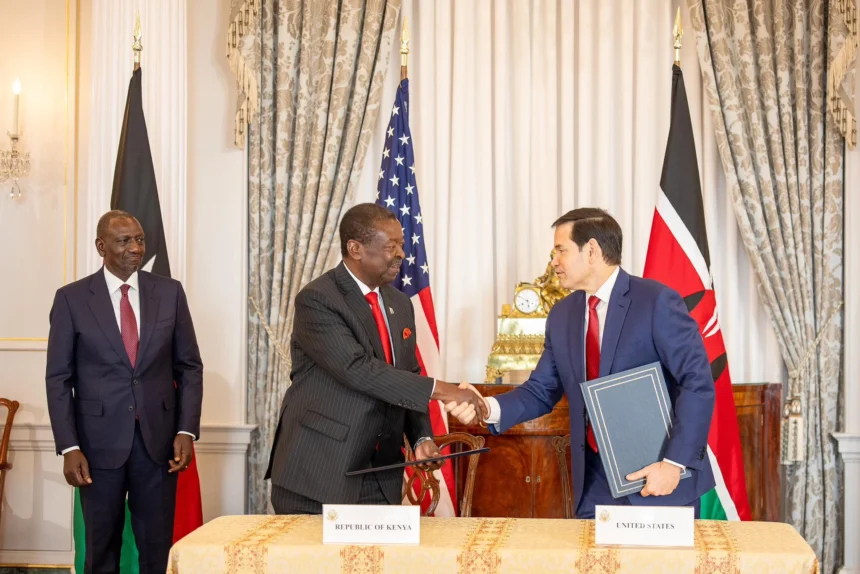
When Kenya signed a five-year health cooperation agreement with the United States in December 2025, the headline figure was $2.5 billion in combined commitments. The United States pledged $1.6 billion, while Kenya committed $850 million of its own funding over the five-year period.
Eight months later, the significance of the agreement goes beyond the money. Kenya’s deal was the first in a new U.S. approach to global health, one that puts governments more directly in charge of programmes while asking partner countries to increase their own health spending.
The model has since expanded rapidly. As of July 1, 2026, the United States had signed 34 bilateral global health agreements covering five-year programmes worth a combined $24.3 billion in U.S. and partner-country funding. Twenty-five of the agreements were with African countries.
Kenya Was The Test Case
The Kenya agreement covers primary healthcare, infectious disease control, maternal and newborn health, epidemic preparedness and other areas of the country’s health system. The U.S. government has said the funding will go directly to Kenyan government health institutions rather than through non-governmental organisations.
For Kenya, that structure fits with a long-standing push for greater government ownership of healthcare.
Kenya’s Ministry of Health has described the partnership as part of an effort to build a government-led and more self-reliant health system. In May, Kenyan and U.S. officials were already reviewing the implementation plan, with the two sides focusing on primary healthcare, malaria and tuberculosis control, maternal and newborn health, and epidemic preparedness.
But the agreement has also raised difficult questions about data.
The Data Question
Kenya’s Health Ministry publicly provides both the cooperation framework and a separate data-sharing agreement.
The issue became the subject of a court challenge shortly after the deal was signed. A Kenyan High Court suspended parts of the agreement while considering a case involving data protection and other legal concerns.
The dispute matters because modern disease surveillance depends on the rapid movement of information between health authorities, laboratories and researchers. At the same time, health information can be highly sensitive, and governments have legitimate questions about who can access it and under what conditions.
Human Rights Watch has also raised concerns about provisions in several of the new U.S. agreements involving access to health data and biological materials.
The disagreement does not mean that data sharing itself is necessarily harmful. During an outbreak, rapid access to reliable information can help governments identify and respond to disease threats. The important question is how that sharing is governed and what protections remain in place.
Africa Is Signing
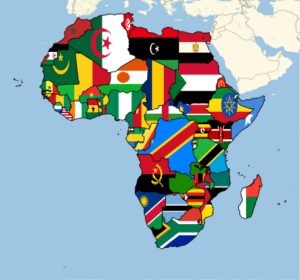
Kenya is far from alone.
The agreements now cover countries including Nigeria, Uganda, Ethiopia, Mozambique, Rwanda, Tanzania, Malawi, the Democratic Republic of Congo and Côte d’Ivoire. The financial commitments vary widely.
Nigeria’s agreement includes $2.1 billion in U.S. funding and $3 billion in Nigerian co-investment. Uganda’s includes $1.7 billion from the United States and $577 million from Uganda. Tanzania’s five-year agreement provides more than $1.3 billion in U.S. funding, while Tanzania has committed $1.8 billion of its own resources.
Those numbers help explain why governments are willing to participate.
African health systems face significant financing gaps, and the reduction of traditional U.S. foreign assistance has created additional pressure. A multi-year government-to-government commitment can provide funding for health workers, disease control, surveillance and essential services at a time when governments are trying to maintain those programmes.
The new agreements also require countries to contribute more of their own money, which Washington presents as a route toward greater self-sufficiency. Across the 34 agreements tracked by KFF, partner-country contributions account for about 39% of the total announced funding.
The Bigger Question
The debate is therefore not simply about whether African countries should accept American health funding.
It is about what kind of relationship that funding creates.
Supporters of the model argue that direct government financing can give African countries greater ownership of their health systems and reduce dependence on fragmented donor programmes.
Critics argue that the agreements give the United States significant leverage and could create obligations around sensitive health information and biological materials. A July analysis in the BMJ described the new arrangements as transactional and questioned whether countries can secure the financial benefits while maintaining control over health data and pathogens.
There is also a wider African question. If countries negotiate individually with Washington, they may gain access to funding tailored to their own needs, but they are also negotiating separately over issues that increasingly have continental implications.
Kenya’s experience shows why that matters.
The country is moving ahead with a $2.5 billion health partnership while questions about data governance remain part of the public debate. The outcome will help show whether the new U.S. model delivers what both sides say they want: stronger national health systems with greater African ownership, or a new form of dependence built around a different set of conditions.
For now, the experiment is still unfolding. What happens in Kenya may offer one of the clearest indications of what America’s new approach to health financing means for Africa.