By the time a parent discovers what their child has been taught, it may already be too late to have the conversation at home.
That is the concern increasingly surrounding Comprehensive Sexuality Education (CSE), a global educational framework promoted by organizations including the World Health Organization (WHO), UNESCO, SIECUS and Planned Parenthood.
Presented as a way to protect children through knowledge, CSE goes considerably beyond teaching basic anatomy, puberty or personal hygiene.
Its international frameworks address relationships, gender, sexual orientation, contraception, consent, sexual behaviour, reproductive health and what UNESCO describes as the “knowledge, skills, attitudes and values” children need to navigate sexuality.
And that raises an uncomfortable question:
Should international organizations and school systems have the authority to determine how and how early children are introduced to these subjects?
The danger is, it can start earlier than most parents realize.
UNESCO’s International Technical Guidance on Sexuality Education organizes learning objectives beginning at ages 5–8, followed by 9–12, 12–15 and 15–18+ age groups.
The European Standards for Sexuality Education developed by the WHO Regional Office for Europe go even further, providing a framework covering children as young as age 0–4 years and beyond.
Quite Alarming

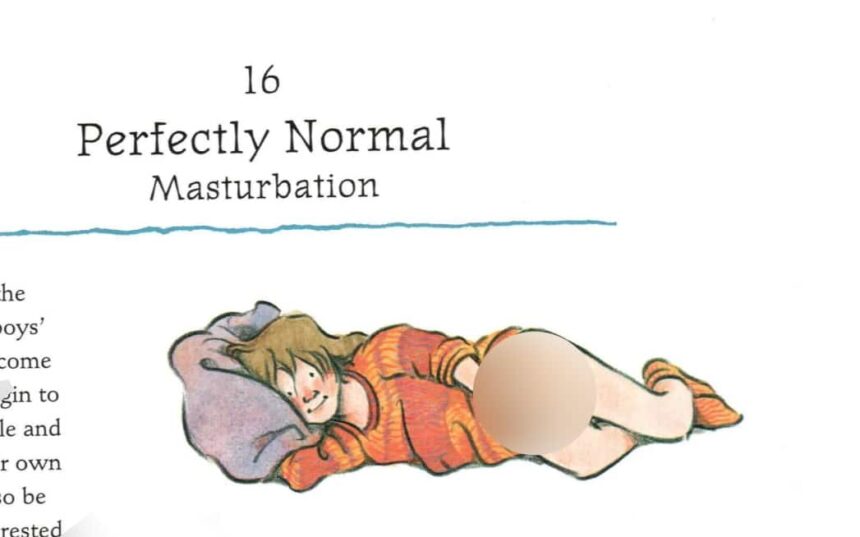
The document includes learning objectives concerning children’s awareness of their bodies, gender identity and bodily pleasure. Among its listed objectives for ages 0–4 is giving information about “enjoyment and pleasure when touching one’s body” and masturbation, as well as enabling children to develop awareness of “gender identity” which is a term used to mask the propagation of the LGBTQ+ agenda.
For many, this is where the alarm bells begin to ring.
A four-year-old does not need such information.

Yet international sexuality-education frameworks contemplate sexuality-related learning from the earliest years of childhood.
The question is no longer simply whether children should be educated.
It is how much is too much, too soon?
The WHO’s vision of sex education is farther than biology, their current position describes CSE as education about bodies, health, relationships and rights.
But the international guidance goes beyond biological reproduction.
Its framework includes subjects such as gender roles and gender norms, identity, relationships, sexual and reproductive health, contraception and other dimensions of sexuality.
That distinction matters.
Teaching a child how the human reproductive system works is one thing.
Teaching a child how to interpret gender, sexuality, relationships and personal identity is another.
The latter moves from biology into worldview, and in most cases a perverse one.
And whenever a curriculum begins shaping a child’s understanding of morality, identity, relationships and sexuality, parents have a legitimate reason to ask:
Whose worldview is being taught?
Another major provider of sexuality-education resources is Planned Parenthood. Its educator platform provides teachers with lessons and materials covering subjects including consent, gender identity, relationship skills, sexually transmitted infections and media literacy.
Its educational resources also address gender identity and distinguish between sex assigned at birth and gender identity.
Once again, the propagation of the LGBTQ+ agenda.
For parents who believe these questions belong within the family, this creates a serious concern.
A child can enter a classroom expecting to learn about health and leave having encountered concepts that directly challenge the values being taught at home.
And parents may not even realize how broad the curriculum has become.
SIECUS, another advocate of CSE has been one of the longstanding voices behind comprehensive sexuality education in the United States.
Its own stated mission is revealing.
The organization says it seeks to advance comprehensive sex education as a means of building a “long-term culture shift”, particularly around sexuality, sexual and reproductive health, gender equity, consent, personal safety and autonomy.
That phrase deserves attention:
A long-term culture shift.
This suggests that CSE is not simply about teaching children facts about their bodies.
It is also about influencing how society understands sexuality, gender, relationships and individual autonomy.
That may be precisely what its advocates want.
But parents are entitled to ask whether that transformation should take place through classrooms or whether it should be left primarily to families.
One of the most frequently used phrases surrounding CSE is “age-appropriate.”
But who decides what is age-appropriate?
A policymaker?
An international health organization?
A curriculum developer?
A teacher?
Or the parent who knows the child personally?
A standardized curriculum cannot know every child’s emotional maturity, family circumstances, religious convictions or cultural background.
What one curriculum designer considers appropriate for a five-year-old may be considered completely inappropriate by another parent.
And that is precisely why sexuality education is different from teaching mathematics.
There is rarely a controversy over whether a seven-year-old should learn addition.
But when a seven-year-old is introduced to concepts involving sexuality, identity or intimate relationships, values inevitably enter the conversation.
The schools becoming moral authorities poses a serious danger.
Parents are not merely providers of food, clothing and school fees.
They are the primary moral educators of their children.
They determine the values, beliefs and boundaries within which their children are raised.
But when schools increasingly become the source of information on sexuality and identity, the possibility emerges that children will receive their most influential lessons on these subjects outside the home.
The result can be a quiet transfer of authority.
From parent to institution.
From family conversation to standardized curriculum.
From parental guidance to external frameworks.
And once that authority has shifted, getting it back may not be easy.
Children can be given information before they possess the maturity to understand its implications.
A child can memorize terminology without possessing the emotional maturity required to navigate the realities behind those terms.
Giving children increasingly sophisticated information about sexuality does not automatically make them wiser.
Sometimes, childhood needs protection from information just as much as it needs protection from ignorance.
The goal should not simply be to ensure that a child knows more.
The goal should be to ensure that the child grows in wisdom, character, self-control and sound judgment.
The CSE debate is occurring in a radically different world from the one previous generations knew.
Children now have smartphones.
They have social media.
They have YouTube, Instagram, TikTok, online forums and unrestricted access to information.
They can encounter sexual content within seconds.
This reality is frequently used as an argument for CSE:
“If we don’t teach them, the internet will.”
But there is another way to look at it.
Perhaps the answer is not to normalize increasingly complex sexual concepts for younger children.
Perhaps the answer is to strengthen parents, families and communities so that children have trusted adults to turn to before the internet becomes their teacher.
Because the solution to a culture overflowing with information should not necessarily be more information.
It should be better guidance.
The debate over CSE is ultimately bigger than sex education.
It is about who gets to shape a child’s understanding of the world.
WHO and UNESCO have developed international frameworks for sexuality education. SIECUS advocates for comprehensive sexuality education as part of broader social change. Planned Parenthood produces educational materials for teachers and students.
These organizations have made their positions clear.
Now parents need to make theirs clear too.
What exactly is being taught?
At what age?
Using what materials?
Who developed those materials?
What role does the parent have?
Can parents review the curriculum?
Can they object to particular content?
And most importantly:
Does the education reinforce the values of the family or replace them?
Parents cannot afford to be passive.
Because the most consequential lessons a child receives may not be written on the blackboard.
They may be the lessons that quietly shape how that child understands their body, their identity, their relationships, their values and ultimately themselves.
The question is no longer simply, “What is my child learning?”
It is: “Who is teaching my child what to believe?”
Sources :
WHO — Comprehensive Sexuality Education: Questions & Answer, WHO — Comprehensive Sexuality Education Fact Sheet, UNESCO — International Technical Guidance on Sexuality Education, WHO/UNESCO/UNFPA — The Journey Towards Comprehensive Sexuality Education: Global Status Report.