
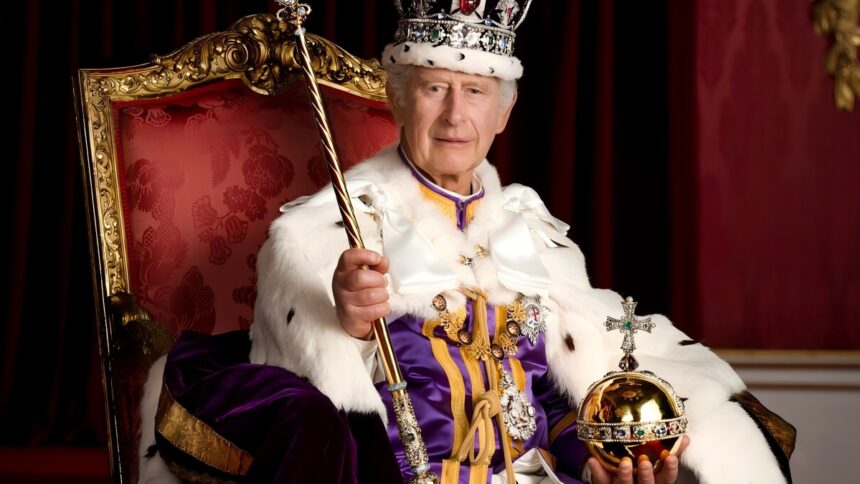
A former chaplain to Queen Elizabeth II has launched a blistering critique of King Charles III, accusing the monarch of breaking his sacred Coronation oath, abandoning his constitutional duty to the Church of England, and “deserting” the Christian faith he swore to defend.
Dr. Gavin Ashenden, who served as a chaplain to the Queen from 2008 to 2017, has ignited a theological and constitutional firestorm by declaring that King Charles has fundamentally altered his religious commitment, a shift Ashenden describes as nothing less than oath-breaking.
The Easter Silence vs. Ramadan Message
The controversy erupted following King Charles’s decision to skip his traditional annual Easter message, a decades-long tradition that the sovereign has personally delivered to the nation while instead producing a public greeting addressing Muslims for Ramadan.
Buckingham Palace confirmed the King would not be releasing an Easter message, but had instead issued a statement on the occasion of Ramadan. The contrast struck many as deeply symbolic, and for Ashenden, deeply troubling.
The timing was not lost on Christian observers. Easter the celebration of the resurrection of The Lord Jesus Christ, is the most significant feast day in the Christian calendar. The sovereign’s Easter message is not merely a ceremonial formality; it is a direct expression of the monarch’s role as “Defender of the Faith” and Governor of the Church of England.
By prioritizing a Ramadan message over Easter, King Charles sent a signal that many Christians found alarming.
“I Am Astonished That You Are So Quickly Deserting…”
Ashenden did not hold back. Quoting language that echoes the Apostle Paul’s own struggles with communities abandoning their faith, he wrote:
“I am astonished that you are so quickly deserting him who called you to live in the grace of Christ and are turning to a different [gospel].”
Ashenden, a former Anglican priest , expressed profound disappointment in what he perceives as a rapid retreat from Christian commitment.
“King Charles has broken his coronation oath to defend the Christian faith,” Ashenden declared in a widely shared commentary.
The Coronation Oath Controversy
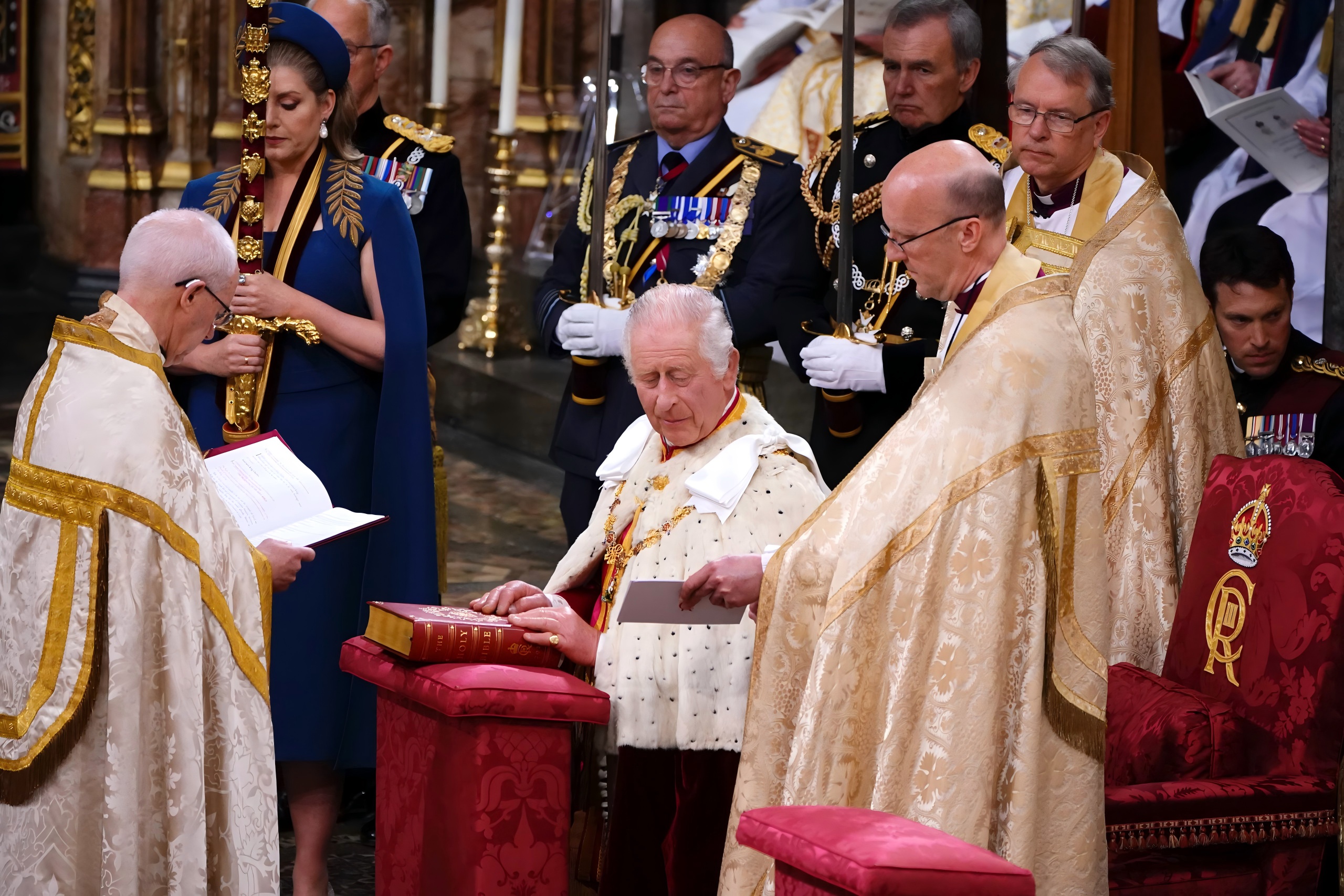
At the heart of Ashenden’s accusation is a constitutional and theological dispute over the Coronation Oath itself.
Upon his coronation in 2023, King Charles swore to:
“…uphold and preserve the Protestant Reformed religion established by law, and to defend the same.”
This is not a vague aspiration. It is a solemn, legally binding pledge, and the monarch is legally required to swear it.
Ashenden argues that the King’s recent actions, coupled with a shift in how his religious role is publicly framed, suggest that Charles has effectively “revised his pledge.” Specifically, Ashenden contends that the language used to describe the monarch’s faith responsibilities appears to have been softened from a clear duty to “defend the faith” (understood as the Christian faith) toward language that presents the King as a defender of all faiths equally, thereby diminishing the distinctively Christian character of the oath.
The development comes in the wake of Buckingham Palace adopting new language for the monarch’s historic religious title in this year’s Sovereign Grant Annual Report, where “Defender of the Faith” was replaced with “Protector of the Space for Faith within the Multi-faith Nation.”
“In his view, replacing a clearly defined Christian duty with language of inclusive pluralism weakens the Coronation Oath and diminishes Christ’s authority,” Ashenden explained.
The Constitutional Question
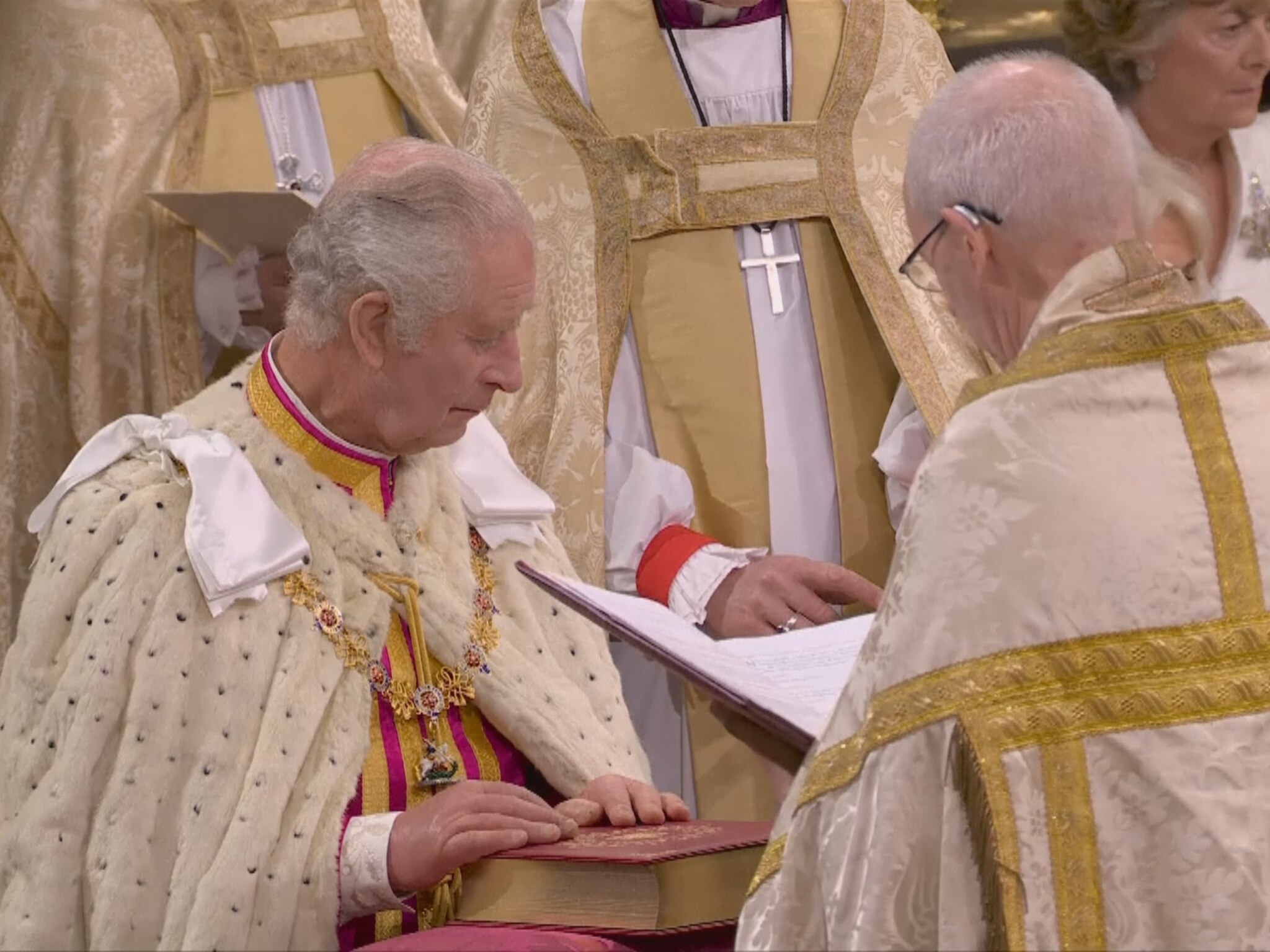
For many, this is not merely a theological disagreement, it is a constitutional crisis in the making.
The sovereign of the United Kingdom is, by law, the Supreme Governor of the Church of England. The Coronation Oath is administered by the Archbishop of Canterbury and is binding in perpetuity. To publicly neglect the Church’s greatest feast while elevating other religious observances can be interpreted as Ashenden does, as a unilateral revision of the oath’s intent.
Ashenden argues that this is not a small wording change. It is a spiritual shift with profound implications:
“It is a matter of oath-breaking,” he said. “It weakens the coronation oath and diminishes Christ’s authority.”
Backlash and Broader Concerns
Ashenden is not the only person to raise concerns. His commentary has sparked heated debate across Christian communities and conservative media outlets.
Some observers argue that King Charles’s interfaith outreach is consistent with the duties of a modern constitutional monarch in a multi-faith society. Others, however, see it as a betrayal of the explicit terms of the Coronation Oath, and more importantly, a betrayal of the Christian foundations upon which the British monarchy rests.
The Archbishop of Canterbury, Justin Welby, has been closely associated with the King’s interfaith agenda, and the combination of the monarch and the Archbishop in this direction has triggered heated debate among traditional Christians.
What Happens Next?
As of August 2026, no formal action has been taken against King Charles regarding his oath. The Coronation Oath is not subject to judicial review, and the monarch’s religious role is largely defined by convention rather than enforceable law.
But for devout Christians , and for those who regard the Coronation Oath as a sacred covenant , the issue is one of moral and spiritual accountability. Ashenden’s critique carries particular weight precisely because he served inside the royal household and understood the Queen’s own deep commitment to her oath.
Queen Elizabeth II, who reigned for 70 years, was widely regarded as someone who took her Coronation Oath with absolute seriousness, never straying from its words, never deviating from its spirit.
For Ashenden, King Charles’s apparent departure is not just a political misstep. It is, in his words, a spiritual abandonment: “so quickly deserting him who called you to live in the grace of Christ.”